Law on Economic Zones: its impact in the development of business parks
18/05/2012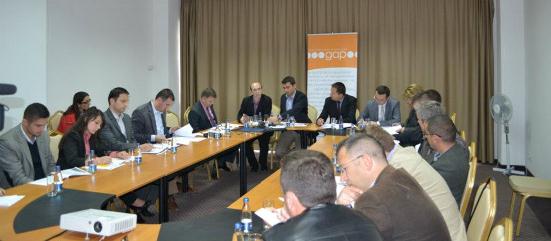
18 May 2012, Prishtine – Today GAP Institute for Advanced Studies published its latest policy brief Law on Economic Zones: its impact in the development of business parks.
to download the policy brief click here

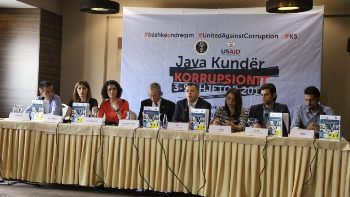
The study was presented in a round table organized by GAP Institute at Hotel Sirius in Prishtina. Among the participants were representatives from the Ministry of Trade and Industry, deputies of Kosovo Assembly, members of civil society organizations, as well as representatives and managers in business parks and business incubators.
The opening remarks were made by the executive director of GAP Institute, Mr. Agron Demi, while the study was presented by its author Mr. Jeton Mehmeti. Mr. Mehmeti, who works as policy analyst at GAP Institute highlighted the key findings of this study: “To facilitate the work of businesses, in 2009, Kosovo Government approved the Law on Economic Zonesthat aimed the creation of specific zones, where the businesses would have better conditions in comparison to other parts of Kosovo, respectively easier access to transport, energy, water and other necessary services for the business. The operation of economic zones, from experience of developed countries, has been an important factor in the overall development of a country. But, how much has this law helped in the development of economic zones in Kosovo and how many of these zones have been declared as such since this law entered into force? Since 2009, Kosovo Government has declared only two economic zones, Business Park in Drenas and Technological Park in Skenderaj. When it is known that the latter has completely failed as a project, the outcome of the Government within three years has been the creation of only one zone. However, during these years a number of business parks in six other municipalities of Kosovo have been created. Some of them are quite functional; some are in the stage of completing the infrastructure and some in the initial stage of construction. Even though none of them is ‘legalized’ by the MTI, and consequently is not declared as an economic zone by the Government, MTI continues to promote them as economic zones. Promoting them creates the impression that their legalization is not necessary and as a result the business parks can function without the Law on Economic Zones. On the other hand, it upraises the dilemma whether the whole procedure on legalization is too complicated.”
Mr. Mehmeti also mentioned some of the main problems that investors face while operating in business parks, without forgetting the advantages that business parks offer to them. “Although operating in these zones provides the investors with many advantages, i.e. easier access in infrastructure, main road exits, convenient rent costs, higher security for businesses, yet, at the same time, there are many problems which investors confront. Today, most of the business parks are half functional, there are delays in establishing proper infrastructure of the parks and there is a mixture of business activities within the park even dangerous to each other, there are business incubators without a single business, as well as there are parks which have totally failed as a project, initiated under public-private model. In this study we have shown the current situation in every Kosovo business park, both the progress and problems”, he said. In addition he brought examples of successful business parks from Macedonia and Turkey, from which Kosovo could learn good lessons.
The following participants also contributed to the discussion: Mr. Granit Berisha from Ministry of Trade and Industry, Mr. Zenun Pajaziti -Member of Parliament, Ms. Myzejene Selmani - Member of Parliament, Mr. Hashim Deshishku – Member of Parliament, etc.