Strengthening the Capacities of Municipalities for Diaspora Engagement in Kosovo
11/02/2026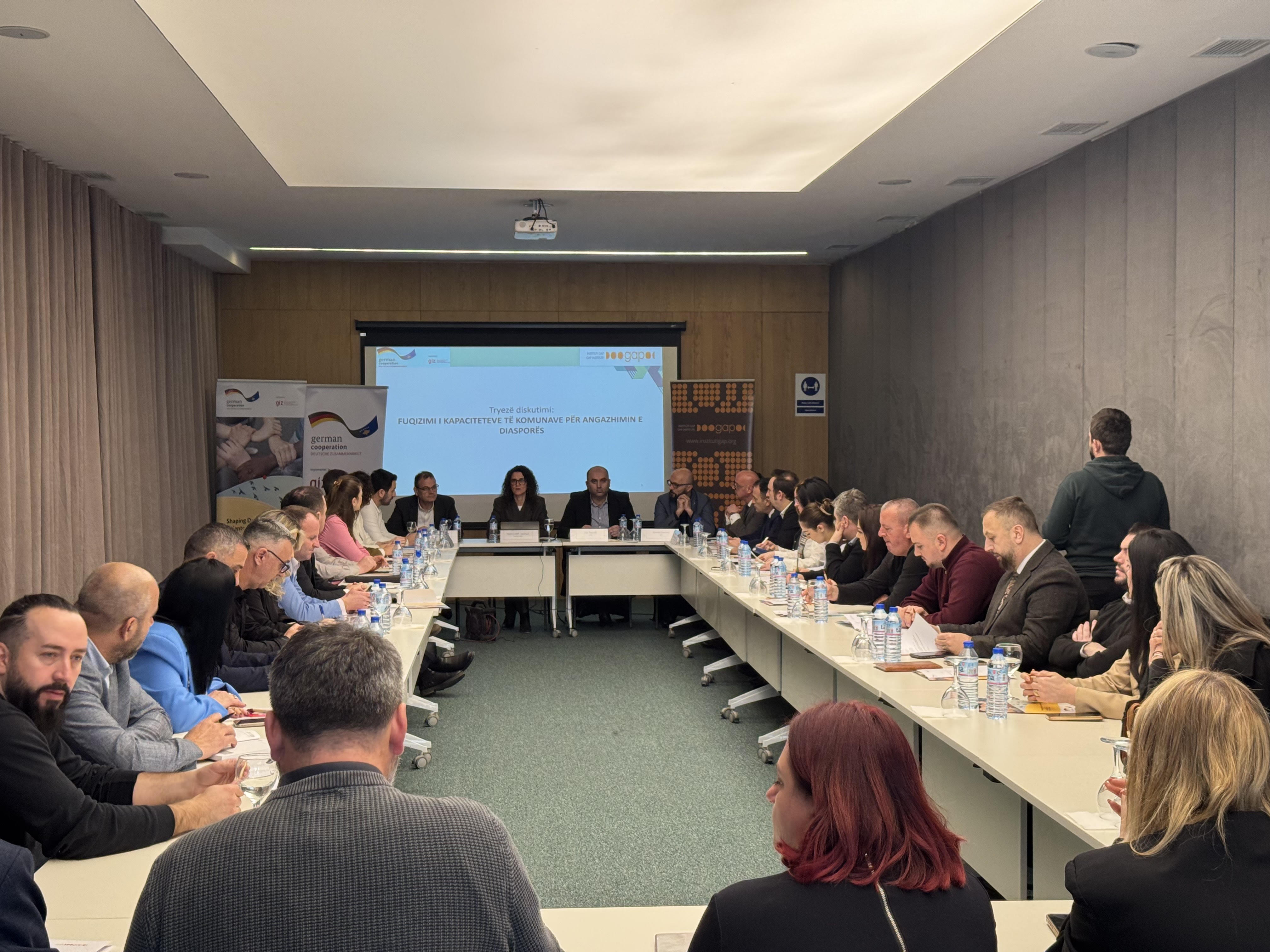
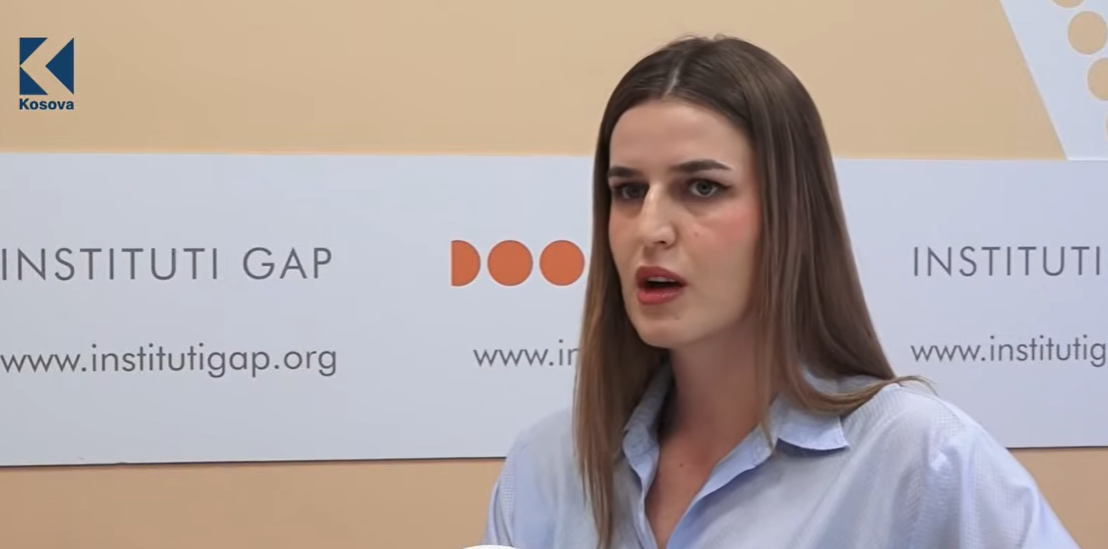
GAP Institute, with the support of GIZ on behalf of the German Government, organized a roundtable discussion where the report “Strengthening the Capacities of Municipalities for Diaspora Engagement in Kosovo” was presented.
The report provides a comprehensive assessment of diaspora-related services at the municipal level in Kosovo, aiming to identify practical interventions that can improve local engagement, service delivery, and coordination with diaspora communities.
The report highlights the absence of a legal framework that would ensure sustainable, comprehensive, and coordinated support for diaspora engagement at the municipal level. Within this unclear legal framework, municipalities have adopted a range of institutional arrangements. Some have established formal structures, such as directorates for diaspora, dedicated sectors, or offices, while others have created smaller units or lack any diaspora-related infrastructure altogether. Furthermore, municipalities often lack the necessary resources and legal clarity to create new diaspora-related positions or to integrate diaspora issues into long-term planning. As a result, diaspora officers in some municipalities are placed within departments for culture, economy, administration, or tourism and, in most cases, also carry additional administrative or operational responsibilities, making diaspora engagement seasonal and largely formal.
Administrative services remain the most common form of diaspora engagement at the local level, mainly focused on civil documentation and property registration. Some municipalities have taken steps to improve the quality and accessibility of these services, particularly during periods of high diaspora visits, but broader economic and cultural engagement remains limited. Although there has been a noticeable increase in interest from diaspora communities to invest in Kosovo—especially in sectors such as construction, agriculture, gastronomy, and manufacturing—many municipalities still lack systems to effectively track these requests or register them in regularly updated databases. In general, municipalities do not have dedicated spaces for information and communication with the diaspora on their official websites.
During the roundtable, Mr. Bekim Salihu, Policy Analyst at GAP, stated that the report finds coordination between the Ministry of Foreign Affairs and Diaspora and municipalities to be low and unsystematic, resulting in duplication of activities, policy uncertainty, and limited access to national programs.
The GAP Institute recommends establishing dedicated diaspora officer positions within municipalities, with clear mandates and strengthened professional capacities, as well as institutionalizing diaspora services throughout the year by expanding them beyond administrative tasks toward investment, tourism, and economic engagement. It also emphasizes the need to develop long-term municipal strategies for diaspora engagement, aligned with national policies and supported by permanent dialogue structures and strengthened coordination with the Ministry of Foreign Affairs and Diaspora. The report underlines the importance of increasing the visibility of investment opportunities through digital platforms, shared databases, and investor packages, as well as integrating diaspora associations, international partnerships, and inter-municipal mechanisms for local development and investment attraction. In this context, it recommends supporting initiatives for youth, women, and the return of professionals from the diaspora through grant schemes and gender-sensitive approaches, as well as developing a unified digital system with the e-Diaspora platform serving as a central gateway for municipal and national services.
The roundtable discussion also included contributions from mayors, representatives of GIZ, municipal officials, representatives of central-level institutions, and other stakeholders.
The full report can be accessed by clicking here.