GAP Institute presented the report "Green Industrial Policies: An Analysis of Kosovos Context"
17/06/2026
As part of the Green Industrial Policies (GIP) project, supported by the Open Society Foundations – Western Balkans (OSF-WB), GAP Institute organized a roundtable discussion and published the report "Green Industrial Policies: An Analysis of Kosovos Context."
Blendi Hasaj, Executive Director of GAP Institute, highlighted GAPs leading role in coordinating the project for more than three years, bringing together civil society organizations from across the Western Balkans. He emphasized that regional cooperation can generate significantly greater impact and benefits. He also noted that the report provides an in-depth analysis of Kosovos economy and warns of the potential economic costs of inaction, particularly in relation to the European Unions Carbon Border Adjustment Mechanism (CBAM), which has been in force since the beginning of this year.
Dritan Nelaj, Head of the Just Energy Transition Program at the Open Society Foundations – Western Balkans, emphasized that global geopolitical tensions, strategic competition between the United States and China, as well as rapid technological developments and advances in artificial intelligence, are making the global economic environment increasingly complex. He stressed that the European Unions green policies should not be viewed as a threat, but rather as an opportunity for Kosovo to prepare its economy for the future and adopt a more proactive approach.
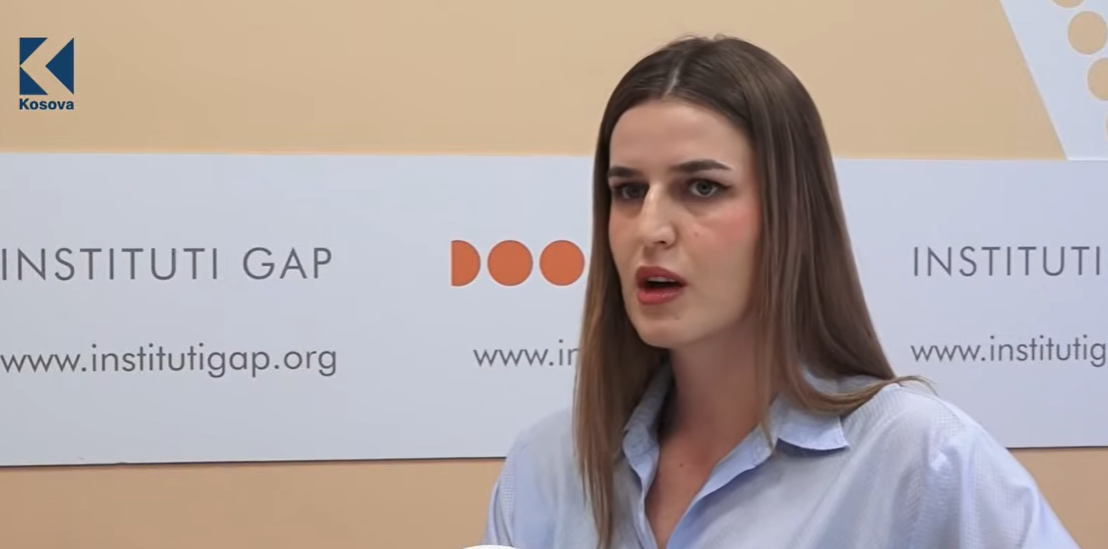
Rrona Zhuri from GAP Institute presented the reports key findings, emphasizing that Kosovo continues to face significant challenges in its green transition, including its heavy reliance on coal, the slow pace of renewable energy development, the impact of the Carbon Border Adjustment Mechanism (CBAM) on domestic industry, and the need for substantial investments in the energy sector. She underlined that comprehensive Green Industrial Policies can help link the energy transition with economic development, enhance the competitiveness of domestic industries, create new jobs, and align Kosovo more closely with the European Unions climate and energy objectives.
Acting Minister of Economy, Artane Rizvanolli, emphasized that investments in new renewable energy generation capacities and energy efficiency remain key priorities for Kosovos decarbonization and green transition. She noted that, regarding current renewable energy investments through the solar and wind auctions, the necessary legal and regulatory framework was established first, paving the way for the implementation of future projects. Ms. Rizvanolli also stressed that investments in energy efficiency will continue and highlighted the importance of grants, loans, and European Union funding for financing green projects.
Meanwhile, Acting Minister of Industry, Entrepreneurship, Trade and Innovation, Mimoza Kusari-Lila, emphasized the importance of Green Industrial Policies by highlighting MINTIs efforts to expand grant schemes for businesses investing in green technologies, develop the countrys first eco-industrial park, promote the circular economy, and strengthen cooperation with educational institutions to build professional capacities in project management. She also noted that, through technology advancement grants and informational and technical assistance sessions on carbon emissions accounting, MINTI will support businesses in preparing to comply with CBAM requirements.
During the panel discussion, Sergiy Maslichenko, Associate Director and Head of Kosovo at the European Bank for Reconstruction and Development (EBRD), emphasized that the EBRD is the largest international financial institution operating in Kosovo, providing approximately €120 million in annual financing, around 70% of which is dedicated to green projects, particularly in renewable energy and energy efficiency. He also highlighted the need to accelerate solar and wind auctions and increase the pace of investments in order to keep up with developments across the Western Balkans. Furthermore, he stressed the importance of strengthening institutional coordination and establishing a centralized platform for managing energy projects.
Trim Tërnava, Chief Executive Officer of KOSTT, emphasized that the transmission system operator is responsible for maintaining the real-time balance of Kosovos electricity system in line with the obligations of the European transmission network. He noted that since 2021, KOSTT has implemented investments, in cooperation with international donors and financial institutions, to modernize the transmission grid and facilitate the connection of new generation capacities. However, he pointed out that approximately 50% of the existing cross-border transmission and distribution capacities remain underutilized. He also announced that KOSTT is developing an interactive map to identify suitable areas for new investments and grid connections, with the aim of improving energy project planning.
Njomza Hoxha, Managing Director of the Kosovo Energy Efficiency Fund (KEEF), highlighted the importance of investing in energy efficiency in both the public and residential sectors. She noted that KEEF has invested approximately €40 million in energy efficiency measures through financing from the Government of Kosovo, international donors, and financial institutions. These investments have resulted in annual energy savings of up to 25 GWh. She further announced that the Fund will continue offering subsidy schemes for individual households and invest in multi-apartment residential buildings through cooperation with municipalities and blended financing with the banking sector.
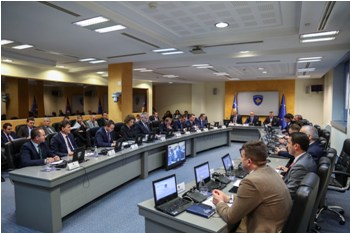
The discussion also brought together representatives of central government institutions, international and local organizations, as well as other relevant stakeholders.
The full report is available here.