GAP published the report: Aligning Kosovos budget with the Sustainable Development Goals (2021 – 2025)
17/11/2026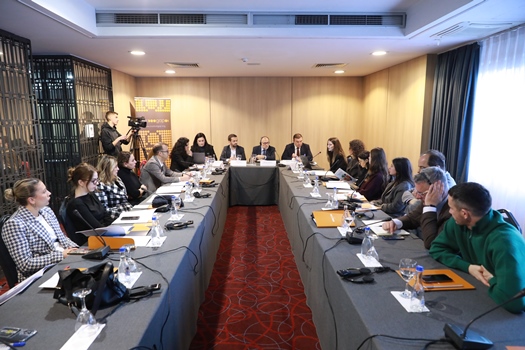
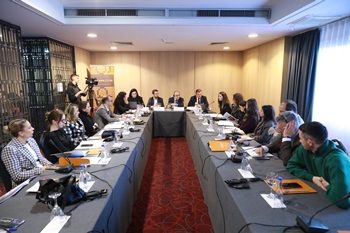
GAP Institute organized a discussion roundtable to present the report “Aligning Kosovos Budget with the Sustainable Development Goals (2021–2025)”, prepared by GAP Institute with the support of the Office of the United Nations Development Coordinator.
Blendi Hasaj, Executive Director of GAP Institute, emphasized that the report provides the first comprehensive analysis of the extent to which Kosovo’s public expenditures align with the 17 Sustainable Development Goals (SDGs) for the 2021–2025 period.
Stephen O’Malley, United Nations Development Coordinator in Kosovo, highlighted that the budget is the clearest reflection of a governments priorities and its commitment to development goals. He recalled Kosovos institutional commitment to the SDGs, demonstrated through the 2018 Assembly Resolution. According to O’Malley, the report provides a clearer basis for understanding budgetary priorities and assessing whether public investments are contributing to Kosovo’s sustainable development commitments.
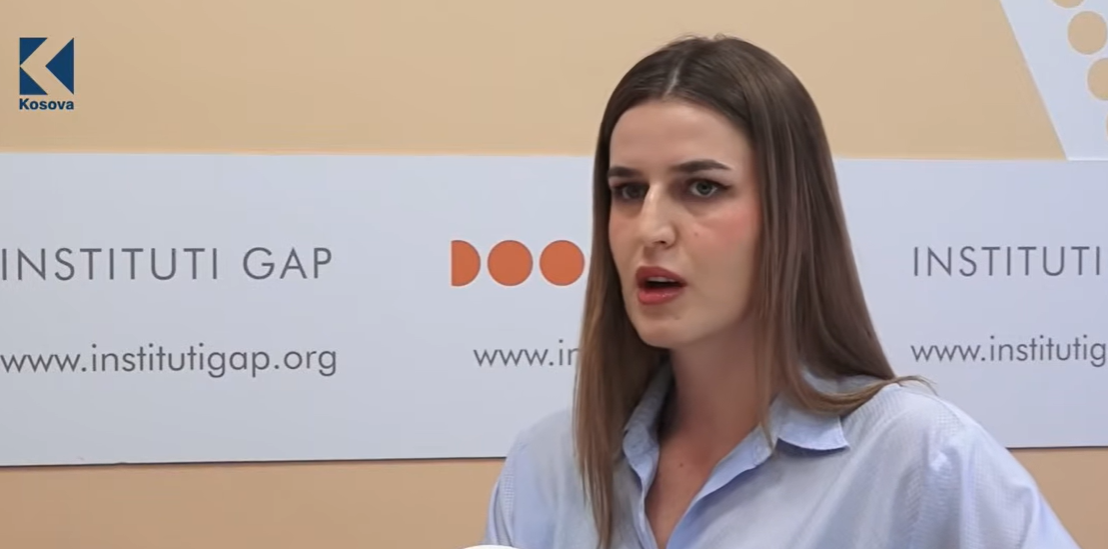
Rrona Zhuri, Research Coordinator at GAP Institute, presented the reports main findings. She noted that approximately 87% of Kosovos budget expenditures during 2021–2025, amounting to €13.4 billion, contributed to the achievement of the SDGs. However, a large share of these expenditures was concentrated on just five goals: poverty reduction, strong institutions, education, infrastructure, and health. Among the report’s key recommendations, she highlighted the need for a more balanced allocation of public funds, better integration of the SDGs into budget planning and formulation, increased funding for underfinanced goals, and improved targeting of social transfers.
Driton Hyseni, Deputy Minister of Environment and Spatial Planning, emphasized the importance of including donations and funding from international partners in the analysis, as they make a significant contribution to achieving the SDGs. He cited, as examples, €25 million in World Bank funding for the water sector and €25 million from the Council of Europe Development Bank to improve social housing conditions.
Armenda Shala, Senior Officer at the Office for Strategic Planning of the Government of Kosovo, spoke about the recent review of the National Development Strategy 2030 and its alignment with the Government Work Plan. She noted that the strategy includes 143 indicators to measure development progress, approximately 80% of which are aligned with the SDGs.
Vlora Nushi-Tuzi, Head of Office at UN Women, emphasized that the report’s findings encourage looking beyond SDG 5 and addressing gender equality as a cross-cutting issue throughout the entire budget in order to tackle structural inequalities. She noted that unpaid care work and limited access to transportation and care services remain among the barriers preventing women from entering the labour market, alongside the impacts of climate change. Gender-responsive budgeting is an important tool that helps institutions plan and allocate funds more equitably, while also ensuring adequate monitoring of public expenditure.
Representatives of central-level institutions, international and local organizations, and other stakeholders also contributed to the discussion.
Read the full report here.